AI Receptionist for Physical Therapy Clinics: 2026 Guide
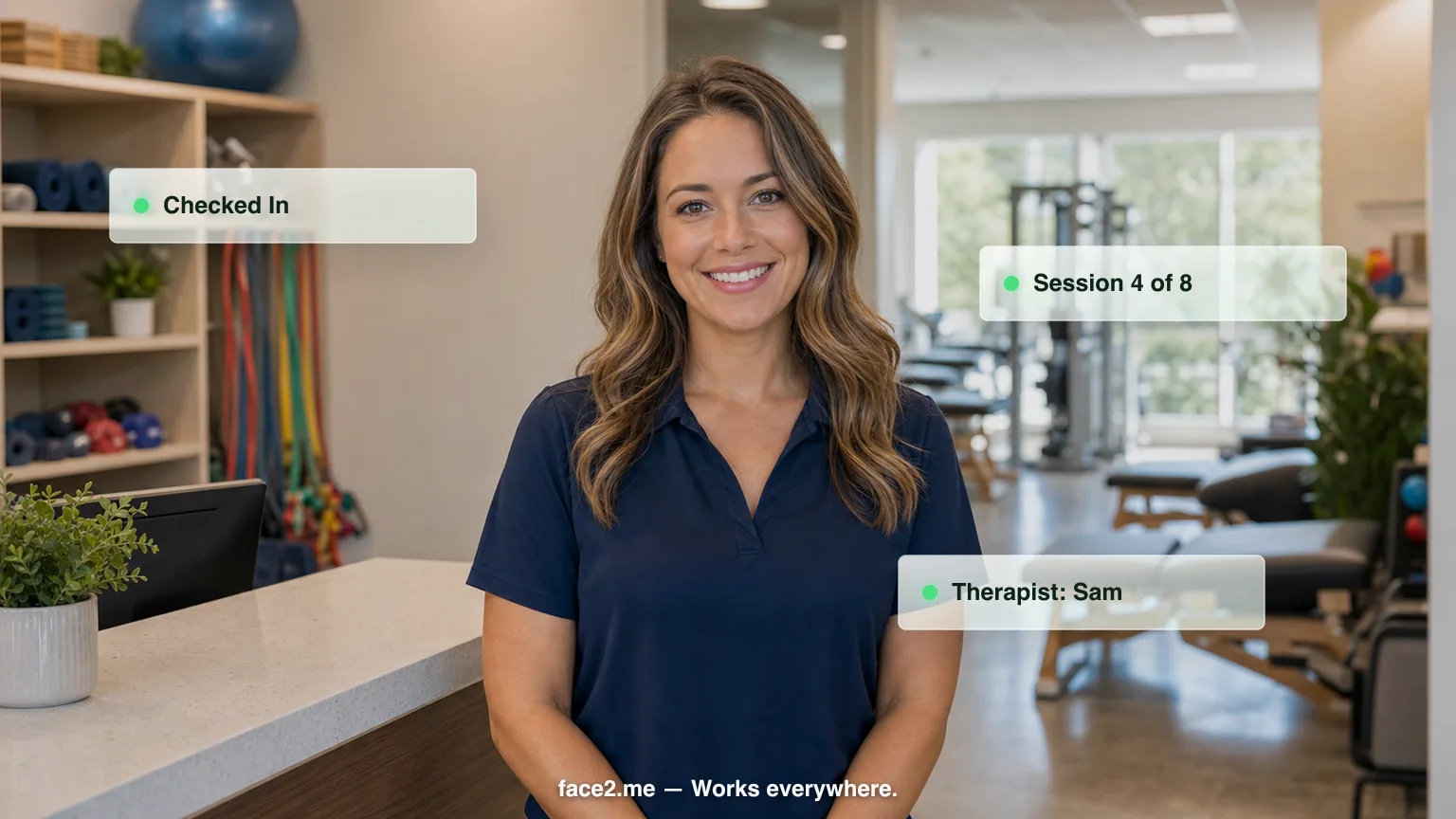
What does an AI receptionist do for a physical therapy clinic?
A physical therapy clinic runs on a schedule most front desks aren't built for: the same patient comes back two or three times a week for weeks or months, each visit needs a quick pre-session check, and one missed authorization or one skipped reminder can knock a patient off their treatment plan entirely. An AI receptionist for physical therapy clinics checks patients in, confirms insurance and visit history, and sends the reminders that keep a recurring plan from quietly falling apart — all before the therapist finishes with the previous patient.
Front-desk staff at a busy outpatient PT clinic spend most of a shift on the same three tasks: checking patients in, scheduling and rescheduling recurring sessions, and chasing down whether a patient's insurance still has visits left. An AI receptionist for physical therapy clinics takes the repetitive parts of that off the front desk so staff can focus on patients who need a real conversation, not a data-entry cycle.
Why physical therapy front desks are different
PT clinics carry a few problems a general medical front desk doesn't:
- Every visit is a check-in, not just the first one. A patient on an 8-week plan checks in 16-24 times, not once — so any friction in the process gets multiplied by every remaining session instead of happening a single time.
- Pre-session context gets skipped when the schedule is tight. Pain level, range-of-motion changes, and home exercise compliance are worth capturing before each session, but when the therapist is running behind, that step is usually the first thing cut.
- Insurance authorization is a ticking clock. Most payers approve a fixed number of visits, and once a clinic goes over that count without a new authorization, the extra sessions get denied and written off — a manual tracking process makes that mistake easy to miss.
- Recurring plans are where patients quietly disappear. A single missed appointment rarely ends a treatment plan on its own, but it's often the first step toward a patient drifting off their schedule entirely, and a front desk juggling walk-ins has little time to chase down every no-show before it becomes a pattern.
The three ways to handle PT front-desk work
1. Phone answering service: $300-$1,000+/month
A live or semi-live human service, usually shared across many client businesses, answers calls and books or reschedules appointments. Pricing scales with call volume since a human is on the other end. It solves the missed-call problem but does nothing for the patient standing at the counter who needs to check in for session 9 of a 20-visit authorization.
2. AI phone agent: $50-$300/month
Software that answers inbound calls, books, and reschedules without a human on the line. This is a real upgrade for a solo PT practice whose main problem is calls going unanswered mid-session, but it's phone-only — it can't check a returning patient in, confirm remaining authorized visits, or run a quick pre-session intake at the counter.
3. In-office AI kiosk: $599-$1,500+/month
A touchscreen kiosk in the lobby with a conversational AI avatar that checks patients in, captures a short pre-session update, verifies insurance, and writes results back into the practice management system your clinic already runs. Face2me falls into this category. Pricing is flat and tiered — Starter from $599/month, Growth from $999/month, Enterprise from $1,500/month per location — with hardware, software, integrations, and support included in every tier.
This is the only option built for a recurring-visit workflow: the same patient checking in repeatedly over weeks, each time needing a fast, consistent process rather than a fresh five-minute conversation with the front desk.
What PT kiosk check-in actually looks like
- A returning patient walks in for their scheduled session — visit 9 of a 20-visit authorized plan, for example.
- The kiosk avatar recognizes the returning patient and pulls up their record, so front-desk staff aren't re-entering contact and insurance details that were already captured at intake.
- A short pre-session check captures how the patient is doing since the last visit — useful context for the therapist walking in a few minutes later, without adding a manual intake step to the schedule.
- Insurance is verified at check-in, before the patient sees the therapist, rather than being confirmed after the fact.
- Check-in completes in under 60 seconds, and the visit is marked ready in the practice management system your clinic already uses — no separate re-entry step for staff.
- Any copay or outstanding balance can be collected at the kiosk, rather than chased down after the session ends.
Face2me's name-match accuracy for returning patients runs at 99.2%, which matters more in a PT clinic than almost anywhere else — the same patients check in dozens of times over a treatment plan, and a mismatched record means lost history, not just a slower line.
Keeping patients on their treatment plan
The biggest lever a front desk has over PT outcomes isn't clinical — it's scheduling discipline. Automated SMS reminders ahead of each recurring session are one of the simplest ways to keep a multi-week plan from quietly falling apart, and clinics using them alongside kiosk check-in see meaningfully fewer patients drop off mid-plan. A patient who gets a reminder the day before, and then a fast, frictionless check-in when they arrive, is far more likely to complete the full course of care than one relying on a paper appointment card from six weeks ago.
Cost comparison at a glance
| Option | Monthly cost | Recurring-visit check-in | Insurance verification |
|---|---|---|---|
| Phone answering service | $300-$1,000+ | No | No |
| AI phone agent | $50-$300 | No | No |
| In-office AI kiosk (Face2me) | $599-$1,500+ | Yes | Yes, at check-in |
For most PT clinics, the phone and lobby problems are genuinely separate — an answering service or phone agent to stop missing calls between sessions, and a kiosk to move a full waiting room through recurring check-ins without adding front-desk overhead. See the full cost math across categories in how much an AI receptionist costs, or how the categories stack up generally in best AI receptionist options.
Where Face2me fits for physical therapy clinics
Face2me is built for a front desk that sees the same patients again and again, not just once. It checks returning patients in under 60 seconds, verifies insurance before the session starts, and sends the reminders that keep a recurring plan on track — all in 30+ auto-detected languages for clinics serving multilingual patients. See how it's configured specifically for physical therapy on our physical therapy vertical page, or book a live demo and check in a mock returning patient yourself.
FAQ
How much does an AI receptionist cost for a physical therapy clinic?
Face2me starts at $599/month for a single-location clinic (Starter plan), with setup from $2,000. Clinics with up to three locations use Growth at $999/month (setup from $8,000), and multi-location groups use Enterprise at $1,500+/month per location with custom setup. Pricing is month-to-month with no annual contract, and hardware, software, and support are included in every tier.
Can the kiosk track how many authorized visits a patient has left?
Not directly — tracking a visit count against a payer authorization is a billing-system function, not something the kiosk performs. Face2me verifies insurance at check-in, before the patient is seen, and logs every interaction for your records. For remaining-visit limits against a specific authorization, clinics still need to check their billing system or clearinghouse directly.
Does the kiosk perform pain or range-of-motion assessments?
No. Face2me doesn't perform clinical assessments — that stays with the therapist. What it handles is check-in, a short pre-session update from the patient, digital intake and consent forms, and insurance verification, so the paperwork side of the visit is done before the patient reaches the treatment room.
How does an AI kiosk reduce patients dropping off their treatment plan?
Face2me sends automated SMS reminders ahead of each recurring session, which cuts down on the missed appointments that are usually the first step toward a patient drifting off their plan. Paired with fast, consistent check-in every visit, patients face less friction returning for session 12 than they did for session 1 — which matters over an 8- to 12-week course of care.
Is an AI receptionist for a PT clinic HIPAA compliant?
Yes. Face2me is HIPAA compliant and includes a signed Business Associate Agreement at no extra cost. Every check-in, insurance verification, and payment action is logged, and patient data is stored for 180 days and then automatically deleted, so your clinic isn't holding PHI longer than necessary.
Does Face2me integrate with WebPT or TheraOffice?
Face2me's built-in integrations include Dentrix, Open Dental, Eaglesoft, Opera PMS, Mews, Mindbody, and AthenaHealth, plus a Stripe terminal for copay and payment collection. WebPT and TheraOffice aren't on that list today, but Face2me's team builds custom API integrations per client, so connecting your practice management system is typically part of onboarding before go-live.