AI Receptionist for Mental Health Practices: 2026 Guide
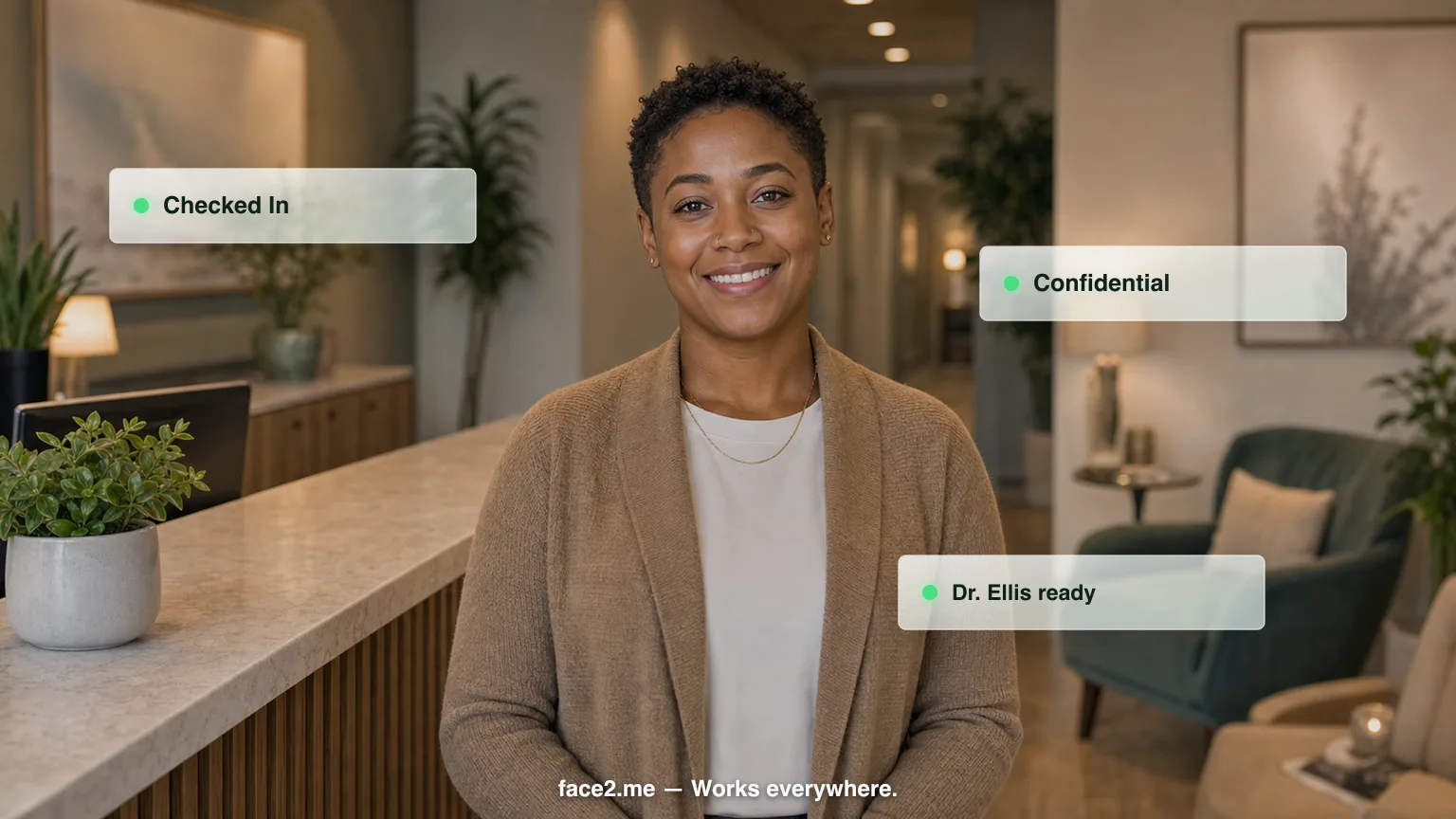
What does an AI receptionist do for a mental health practice?
A mental health practice's front desk carries a problem most other clinics don't: the check-in conversation itself can be part of what makes a client anxious about coming in. An AI receptionist for mental health practices moves intake off the counter and onto a private touchscreen — checking clients in, collecting PHQ-9 or GAD-7 screening forms, confirming the appointment, and sending a reminder ahead of the next session — without anyone having to say why they're there out loud in a shared waiting room.
The category splits into the same three options every front-desk buyer runs into — a phone answering service, an AI phone agent, and an in-office kiosk — but therapy and counseling practices have a constraint the other two specialties in this space don't share as sharply: discretion isn't a nice-to-have, it's the whole job.
Why mental health check-in is different
A few things separate a therapy or counseling practice from a typical medical front desk:
- The lobby itself is a stressor. Clients managing anxiety, depression, or trauma often find a traditional check-in exchange — stating their name and reason for visiting within earshot of other clients — distressing before the session has even started.
- No-show rates run highest in this specialty. Mental health practices see no-show rates of roughly 20-30%, higher than almost any other medical field, which makes reminder timing and tone unusually important.
- Screening forms get skipped under discomfort. PHQ-9, GAD-7, and intake questionnaires are often left incomplete or rushed when a client fills them out on paper in a shared waiting room rather than privately.
- Solo and small-group practices can't justify a dedicated receptionist. A single therapist or a small group practice frequently can't support a full-time front-desk hire, but still needs intake, scheduling, and reminders handled reliably.
The three ways to handle mental health front-desk work
1. Phone answering service: $300-$1,000+/month
A live or semi-live human service, usually shared across many client businesses, that answers calls and books or reschedules sessions. Pricing scales with call volume since you're paying for human labor on the back end. This helps with missed calls between sessions but does nothing for the client already sitting in your waiting room before an appointment.
2. AI phone agent: $50-$300/month
Software that answers inbound calls and handles basic scheduling without a human on the line. A real upgrade over voicemail for a solo therapist whose main problem is calls going unanswered mid-session, but it's phone-only — it can't hand a client a private screening form or check them in quietly at the counter.
3. In-office AI kiosk: $599-$1,500+/month
A touchscreen kiosk in the waiting area with a conversational AI avatar that checks clients in, presents screening forms on-screen, confirms the session, and writes the result back into your practice management system — all without a spoken exchange at a counter. Face2me falls into this category. Pricing is flat and tiered — Starter from $599/month, Growth from $999/month, Enterprise from $1,500/month per location — with hardware, software, integrations, and support included in every tier.
This is the only option built around the actual constraint mental health practices face: intake needs to happen without anyone else in the room hearing it.
What private kiosk check-in actually looks like
- A client arrives for a scheduled session and approaches the kiosk instead of a front-desk counter.
- The avatar confirms their name and appointment privately on-screen — no need to state a reason for visiting out loud in a shared waiting area.
- Any due screening forms, such as PHQ-9 or GAD-7, are presented on the touchscreen for the client to complete at their own pace, rather than on a paper clipboard in the lobby.
- Check-in completes in under 60 seconds, and the therapist is notified that the client has arrived and completed any pending forms.
- A gentle, non-clinically-worded reminder goes out automatically ahead of the client's next appointment, timed to reduce the higher no-show rates this specialty sees.
Face2me's name-match accuracy for returning clients runs at 99.2%, so a client isn't stuck correcting a misidentified record in front of others, and practices pairing kiosk check-in with automated reminders see roughly 40% fewer no-shows than phone-and-paper scheduling alone — meaningful in a field where a missed session can set back an entire treatment plan.
The HIPAA and privacy question
Mental health records carry some of the most sensitive protected health information any practice handles — screening results, session notes, diagnoses — so HIPAA compliance is not optional for any tool touching intake in this specialty. Beyond the legal requirement, the practical bar is higher too: the check-in experience itself needs to protect a client's privacy, not just the data behind it. Any vendor you evaluate should offer a signed Business Associate Agreement (BAA) and a check-in flow that doesn't require a client to say anything sensitive out loud. Face2me includes HIPAA compliance and a signed BAA on every tier, and every action on the kiosk is logged; see the full HIPAA compliance breakdown for what that should cover before you sign with any vendor.
Cost comparison at a glance
| Option | Monthly cost | Private on-screen intake | Screening form collection |
|---|---|---|---|
| Phone answering service | $300-$1,000+ | No | No |
| AI phone agent | $50-$300 | No | No |
| In-office AI kiosk (Face2me) | $599-$1,500+ | Yes | Yes |
For most mental health practices, the phone and lobby problems are genuinely separate — an answering service or phone agent to stop missing calls between sessions, and a kiosk to move intake off the counter and onto a private screen. See the full cost math across categories in how much an AI receptionist costs, or how the categories stack up generally in best AI receptionist options.
Where Face2me fits for mental health practices
Face2me is built for the specific discretion a therapy or counseling practice needs — private on-screen check-in, screening forms that don't require a client to speak sensitive details out loud, and reminders worded carefully enough to matter for clients managing anxiety or trauma. It checks clients in under 60 seconds, and it works in 30+ auto-detected languages for practices serving multilingual clients. See how it's configured specifically for this specialty on our mental health vertical page, or book a live demo and check in a mock client yourself.
FAQ
How much does an AI receptionist cost for a mental health practice?
Face2me starts at $599/month for a single-location practice (Starter plan), with setup from $2,000. Group practices with up to three locations use Growth at $999/month (setup from $8,000), and larger practice groups use Enterprise at $1,500+/month per location with custom setup. Pricing is month-to-month with no annual contract, and hardware, software, and support are included in every tier.
Can clients fill out PHQ-9 or GAD-7 forms privately at the kiosk?
Yes. Clients complete screening questionnaires directly on the touchscreen at check-in, rather than on a paper clipboard in the waiting room or by stating sensitive history to a receptionist. Completed forms are logged and the therapist is notified before the session starts.
Is an AI check-in kiosk HIPAA compliant for therapy clients?
Yes. Face2me is HIPAA compliant and includes a signed Business Associate Agreement at no extra cost. Every check-in and screening form submission is logged, and client data is stored for 180 days before being automatically deleted.
Does a kiosk actually reduce no-shows for therapy appointments?
Mental health practices tend to see higher no-show rates than other specialties, and pairing kiosk check-in with automated SMS reminders timed before each session helps close that gap — practices using Face2me typically see no-shows drop by roughly 40%. Reminder wording is kept gentle and non-clinical, since tone matters for clients managing anxiety or trauma.
Does Face2me integrate with practice management software used by therapists?
Face2me's built-in integrations include AthenaHealth and Stripe payment terminals, alongside scheduling platforms used across healthcare and hospitality. For therapy-specific systems like SimplePractice, TherapyNotes, Jane App, or Valant, the Face2me team builds a custom API integration during on-site setup, so scheduling, intake, and check-in data sync with whatever system your practice already runs.