AI Receptionist for Veterinary Clinics: 2026 Guide
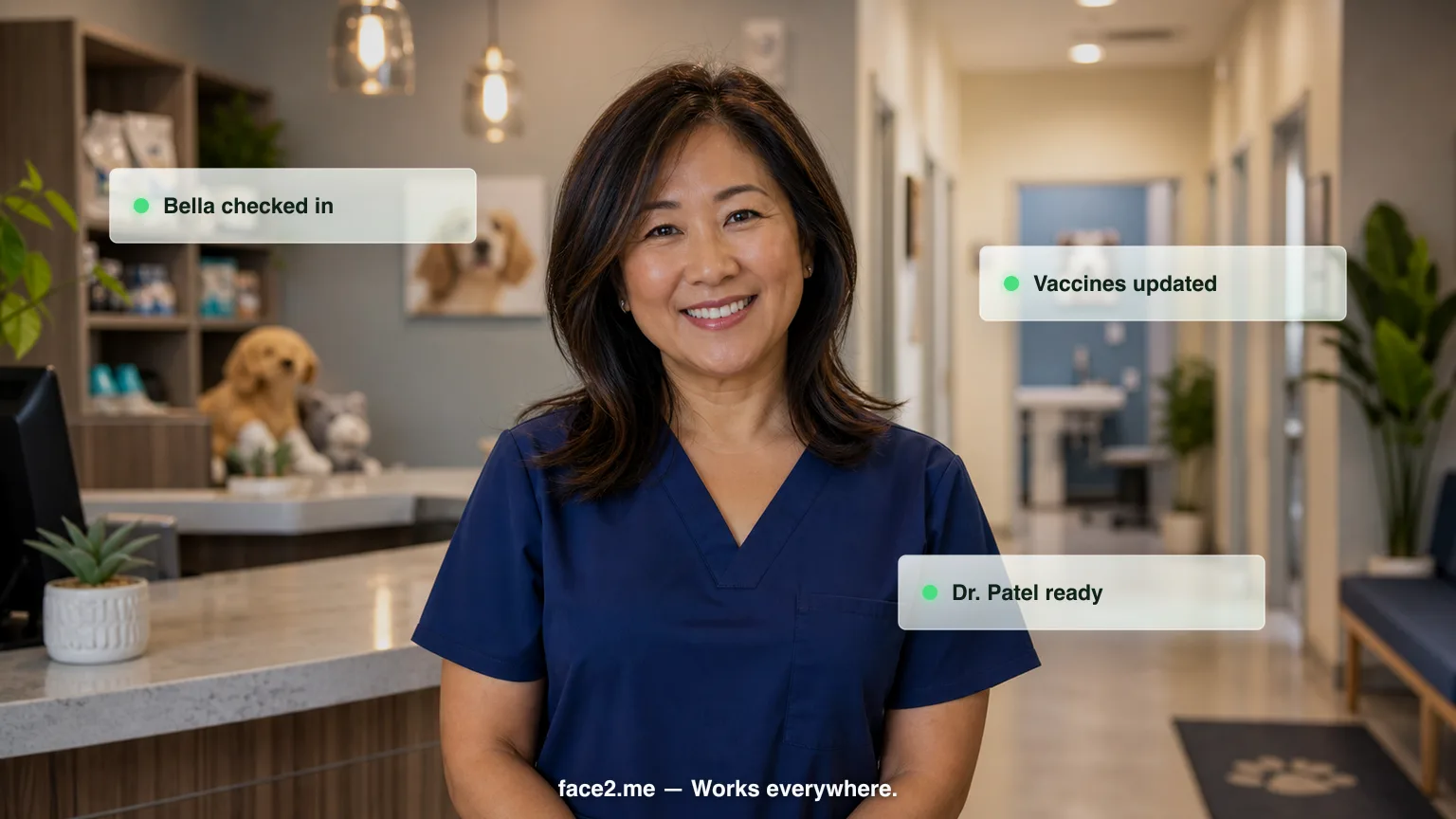
What does an AI receptionist do for a veterinary clinic?
A veterinary clinic's front desk juggles a problem most offices don't: the patient can't talk, the owner is stressed, and the waiting room is full of animals that would rather not be there. An AI receptionist for veterinary clinics greets pet parents at check-in, pulls up medical records automatically, confirms vaccination status, collects payment, and sends reminders for the next visit — all without anyone standing behind a counter juggling a barking waiting room and a ringing phone at the same time.
The category splits into the same three options every front-desk buyer runs into — a phone answering service, an AI phone agent, and an in-office kiosk — but veterinary practices have a workflow problem the other two can't touch: a physical lobby full of anxious animals that needs to move fast, calmly, and accurately.
Why veterinary check-in is different from a medical front desk
A few things make vet clinics distinct even from a comparable human healthcare practice:
- The waiting room is the problem. Anxious dogs, crying cats, and multi-pet households packed into a small lobby create stress for animals and owners alike — and a slow check-in line makes it worse, not just slower.
- Multi-pet households complicate everything. A single owner checking in three animals for the same visit means three sets of weight, breed, and vaccine-history lookups instead of one, and a manual process repeats the same data-entry steps three times.
- Record lookup is slower than it should be. Confirming breed, weight, medication history, and vaccine status typically takes 3-5 minutes per patient at a busy front desk — time that adds up fast when the lobby is full.
- Vaccination and wellness reminders are revenue, not just a courtesy. Missed reminders don't just annoy pet parents — they cost the practice real recurring revenue when an owner forgets a booster or wellness exam and doesn't rebook on their own.
The three ways to handle veterinary front-desk work
1. Phone answering service: $300-$1,000+/month
A live or semi-live human service, usually shared across many client businesses, that answers calls and books or reschedules appointments. Pricing scales with call volume since you're paying for human labor on the back end. This solves missed calls but does nothing for the owner and three cats already standing in your lobby.
2. AI phone agent: $50-$300/month
Software that answers inbound calls and handles basic scheduling and FAQs without a human on the line. A meaningful upgrade over voicemail for a solo vet whose main problem is calls going unanswered mid-exam, but it's phone-only — it can't pull a patient's vaccine record or check in a multi-pet household standing at the counter.
3. In-office AI kiosk: $599-$1,500+/month
A touchscreen kiosk in the lobby with a conversational AI avatar that greets pet parents, checks them in, pulls medical records automatically, and writes results back into your veterinary practice management system in real time. Face2me falls into this category. Pricing is flat and tiered — Starter from $599/month, Growth from $999/month, Enterprise from $1,500/month per location — with hardware, software, integrations, and support included in every tier.
This is the only option built for what actually happens in a vet clinic lobby: multiple animals, multiple owners, and a check-in process that needs to move fast without adding to the chaos.
What veterinary kiosk check-in actually looks like
- A pet parent walks in with one or more animals for an appointment, vaccination, or walk-in concern.
- The kiosk avatar greets them and pulls the household record — every pet registered to that owner, so a multi-pet visit doesn't mean re-entering the same contact and insurance information three separate times.
- It confirms vaccination and wellness status for each animal against what's on file, flagging anything overdue before the vet walks in, not after.
- A short pre-visit questionnaire captures symptoms or concerns for each pet, so the veterinary team knows what to expect before the exam room door opens.
- Check-in completes in under 60 seconds per pet, and the visit is marked ready in the practice management system your staff already uses — no separate re-entry step.
- Payment and any outstanding balance can be collected at the kiosk before the visit starts, rather than chasing it down afterward.
Face2me's name-match accuracy for returning patients runs at 99.2%, so a pet with a common name doesn't get matched to the wrong household record at the counter — a real risk in any practice with a large, repeat-visit patient base.
Does a veterinary kiosk need to be HIPAA compliant?
No — HIPAA governs protected health information for humans, not animal medical records, so a veterinary practice doesn't carry the same regulatory requirement a dental or urgent care clinic does. That said, pet owner contact information, payment details, and household records still deserve the same security discipline: encrypted storage, access logging, and a vendor that treats client data seriously even without a compliance mandate forcing the issue. Face2me applies the same security standards across every vertical it serves, HIPAA-regulated or not — see the full breakdown on our HIPAA compliance page if your practice also handles any human patient data, such as a co-located urgent care or occupational health service.
Cost comparison at a glance
| Option | Monthly cost | Handles multi-pet check-in | Record lookup |
|---|---|---|---|
| Phone answering service | $300-$1,000+ | No | No |
| AI phone agent | $50-$300 | No | No |
| In-office AI kiosk (Face2me) | $599-$1,500+ | Yes | Yes, automatic |
For most veterinary practices, the phone and lobby problems are genuinely separate — an answering service or phone agent to stop missing calls between exams, and a kiosk to move a packed waiting room through check-in without adding to the noise. See the full cost math across categories in how much an AI receptionist costs, or how the categories stack up generally in best AI receptionist options.
Where Face2me fits for veterinary clinics
Face2me is built for the specific chaos of a veterinary lobby — anxious animals, multi-pet households, and a front desk that can't afford to run the same three-minute check-in script for every patient on a Saturday morning. It checks pet parents in under 60 seconds per animal, pulls records automatically instead of asking owners to repeat themselves, and works in 30+ auto-detected languages for practices serving multilingual pet owners. See how it's configured specifically for veterinary clinics on our veterinary vertical page, or book a live demo and check in a mock multi-pet household yourself.
FAQ
How much does an AI receptionist cost for a veterinary clinic?
Face2me starts at $599/month for a single-location clinic (Starter plan), with setup from $2,000. Clinics with up to three locations use Growth at $999/month (setup from $8,000), and multi-location hospital groups use Enterprise at $1,500+/month per location with custom setup. Pricing is month-to-month with no annual contract, and hardware, software, and support are included in every tier.
Can an AI kiosk check in multiple pets for one owner at once?
Yes. Face2me pulls the full household record for a returning owner, so a visit with three animals doesn't mean re-entering the same contact and insurance information three times — each pet is checked in against its own record in the same session.
Does a veterinary AI receptionist need to be HIPAA compliant?
No. HIPAA applies to human protected health information, not animal medical records, so a standard veterinary clinic doesn't have a HIPAA requirement for kiosk check-in. Practices that are co-located with a human healthcare service, such as an occupational health clinic, should confirm HIPAA coverage separately for that side of the business.
How does a kiosk reduce missed vaccination reminders?
Face2me sends automated SMS reminders for vaccinations and wellness exams tied to each pet's record, rather than relying on staff to track due dates manually across every household. Practices using kiosk check-in and automated reminders together see meaningfully fewer missed follow-ups than phone-and-paper scheduling alone, since the reminder goes out automatically instead of depending on someone remembering to send it.
Does Face2me integrate with veterinary practice management software?
Yes. Face2me integrates with Cornerstone, AVImark, eVetPractice, and Shepherd, syncing check-in, record updates, and payment collection directly into the system your practice already runs — no manual re-entry after the pet parent leaves the kiosk.
How long does it take to install a veterinary check-in kiosk?
Go-live takes 7 to 10 business days. The Face2me team installs the kiosk on-site and builds the integration with your veterinary practice management software, so record lookup, vaccination status, and payment collection are all working correctly before the kiosk goes live in your lobby.